We spend our youth absorbing love stories like sponges left out in the rain. Some of us grow up believing that marriage is a grand arrival, a ribbon cutting ceremony at the beginning of a lifelong parade. Others see it as a quiet porch, a cup of tea shared without conditions. No matter what version lives in our minds, we almost never imagine the darker side of the vow. We imagine harmony. We imagine partnership. We imagine forever. What we do not imagine is the slow erosion, the emotional mildew that grows quietly behind the furniture of everyday life.
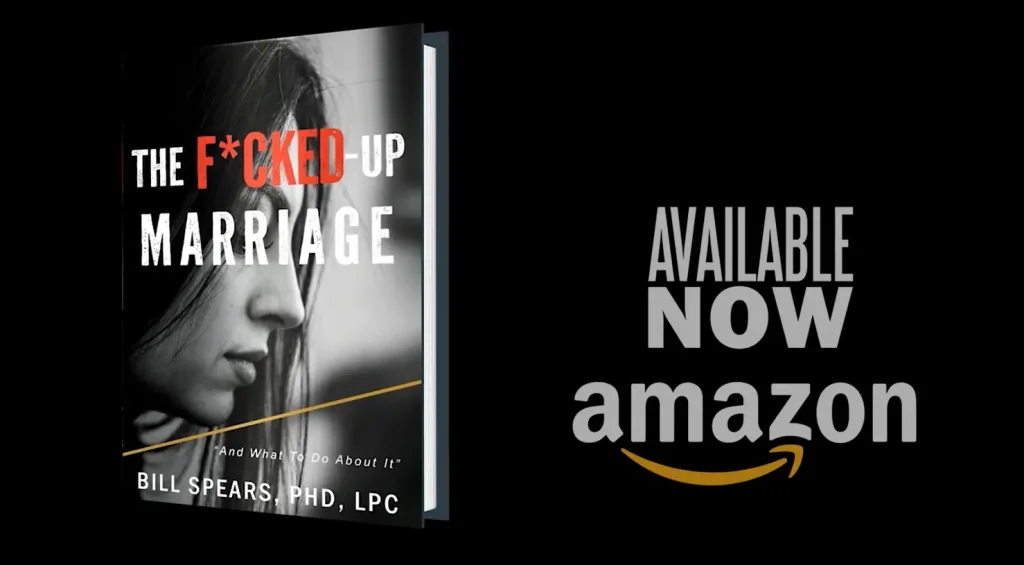
Most people think the tragedy in a marriage comes from the problem itself. Money, in-laws, jealousy, addiction, or miscommunication often take the spotlight of blame. The book by Bill Spears, disagrees sharply with this assumption. He says that a fcked-up marriage is not defined by the problem, but by the response pattern around the problem. When destructive reactions become chronic; continuous and persistent, the marriage moves toward emotional and mental collapse. This is the backbone of his argument, and it forms the central idea of the book. A fcked-up marriage is a union trapped in a repeating loop of toxic reactions that create distance instead of repair.
What Makes a Marriage Unhealthy? The Ignored Red Flags
The book ties unhealthy marriages directly to communication styles. The author lists the most destructive behaviors as criticism, contempt, defensiveness, and stonewalling, borrowing Gottman’s theory of the Four Horsemen. He emphasizes that when these reactions become a partner’s default language, the emotional environment of the marriage changes permanently. He even says that there should be five positive responses for every negative one if a marriage is to stay healthy.
He explains that the most ignored symptom is stonewalling, which means emotionally shutting down, refusing to answer, walking away, or offering calculated silence instead of engagement. He makes it clear that taking a 15-30-minute break to cool off is normal, but when silence is used intentionally for days as punishment or control, it becomes a toxic marriage symptom. This creates frustration, tension, and isolation, sometimes forcing a blowup where more emotional damage happens.
He also talks about defensiveness as an unhealthy marriage sign, driven by fear of losing power. The defensive partner often wants to stay in control, refuses accountability, and may not even realize the emotional harm they cause. He encourages partners to gently affirm each other with lines that restore safety such as, Your words are important to me, or We’re in this together.
A practical example to understand this is a couple that argues about dividing household expenses. If the discussion ends in sneering remarks, guilt trips, or silence for days, the issue is no longer about the expenses, but about the toxic loop that surrounds the conversation. That is when the marriage moves from troubled to unhealthy.
Contempt: The Silent Assassin Most Couples Miss
The author describes contempt as another poisonous marriage problem most couples face in a f*cked-up marriage. He calls it a “serial killer of unsuspecting marriages.” Contempt employs sneering, mimicking, condescending remarks, and superiority. It makes conflict resolution almost impossible because one partner begins treating the other like they are biologically inferior in importance. The emotional result is hurt, resentment, bitterness, and psychological stress. The author firmly supports Gottman’s claim that contempt is the most accurate predictor of divorce.
He gives the powerful case of Charlie and Doris. Charlie repeatedly tried to communicate emotional distress about in-laws dominating their lives. Doris repeatedly dismissed the issue by calling him a “complainer,” minimizing his emotions, and refusing to take responsibility. The author explains that the marriage collapsed not because of the in-laws, but because Doris refused to respond constructively to Charlie’s emotional needs. Charlie eventually divorced her, while Doris still believed the marriage was “great.”
Another example is Mary and Tim. Their marriage was filled with chronic disrespect, mockery, and verbal bitterness. The author asked them to separate temporarily because contempt had brought them dangerously close to violence. He clarifies that separation is used sparingly in counseling, and many couples fail to follow its rules. He also explains that contempt can be fueled by childhood trauma, shame projection, or infidelity, as shown in Tim’s case, where he later recognized that some of his adult reactions came from unresolved abuse by his mother.
These examples show that toxic marriage symptoms are often ignored by the partner who lives in denial, while the other partner emotionally checks out long before the paperwork is filed.
Toxic Marriage Symptoms Beyond Communication: Power, Identity, and Addiction
The book also points out that communication is not the only driver of f*cked-up marriages. He adds that addiction, identity issues, and marital politics (power struggle and influence imbalance) can intensify marital dysfunction. He says that power imbalance almost inevitably creates marital distress when one partner refuses shared influence.
He gives the story of Johnathan and Abigail, whose son Danny’s addiction caused chaos in their household. The author says Danny’s addiction did not destroy the marriage, but the couple’s responses to each other did. Their constant disagreement turned their home into an emotional war zone. They lost intimacy, influence, and parenting presence for their other children. He shows that when partners focus all emotional energy outside the marriage without supporting each other, the union collapses into chronic negativity.
A practical illustration here is a spouse trying to act as their partner’s therapist. He warns firmly against this, saying that emotional closeness prevents objectivity. This is why he promotes professional Marriage Counseling approaches, psycho-education, and therapy by trained clinicians instead of self-treatment at home.
He also emphasizes emotional intelligence as a healing cornerstone. Emotional intelligence means recognizing emotions in yourself and others, labeling them correctly, expressing them appropriately, and regulating them effectively. He argues that emotional fluency is not optional, but essential for marital survival.
A f*cked-up marriage is not a dramatic event. It is a slow drift into emotional toxicity caused by repeating negative reactions, lack of accountability, refusal to share influence, and communication styles dominated by shame, silence, resentment, or superiority. These patterns form the toxic marriage symptoms most couples ignore until the emotional snap line is crossed. Practical advice the author embeds throughout the book includes affirming your partner’s emotions, building boundaries against chronic negativity, seeking competent counselors for personality or addiction issues, taking short cooling-off breaks instead of calculated silence, and practicing emotional intelligence as a daily habit.
This book is not just a marriage counseling book in theory. It is a mirror held up to everyday life, showing readers how small emotional responses repeated daily can either save or destroy a marriage. If couples want to understand the warning signs of a f*cked-up marriage, they must stop staring at the problem and start staring at the pattern around the problem. That is where the truth lives. That is where healing begins. And that is where most marriages quietly succeed or quietly fail.